
Introduction
Understanding How Restaurants Use QR Codes for Digital Menus has become essential in today’s hospitality industry. What once appeared as a temporary adaptation during health crises has now evolved into a permanent digital strategy adopted by restaurants worldwide. From independent cafés to global chains, food businesses are shifting toward QR-enabled digital menu systems to improve operational efficiency, reduce costs, and meet changing consumer expectations.
Modern diners expect convenience, speed, and digital accessibility. Smartphones have become central to daily life, and QR technology bridges the physical restaurant environment with digital interaction. Businesses exploring QR technology can also review our detailed guide on how to generate a business QR code for practical setup insights.
This guide explains How Restaurants Use QR Codes for Digital Menus in detail, covering technical structure, implementation steps, financial impact, industry trends, best practices, common mistakes, and future outlook.
What It Is: Understanding How Restaurants Use QR Codes for Digital Menus
To fully understand How Restaurants Use QR Codes for Digital Menus, it is important to break down the system.
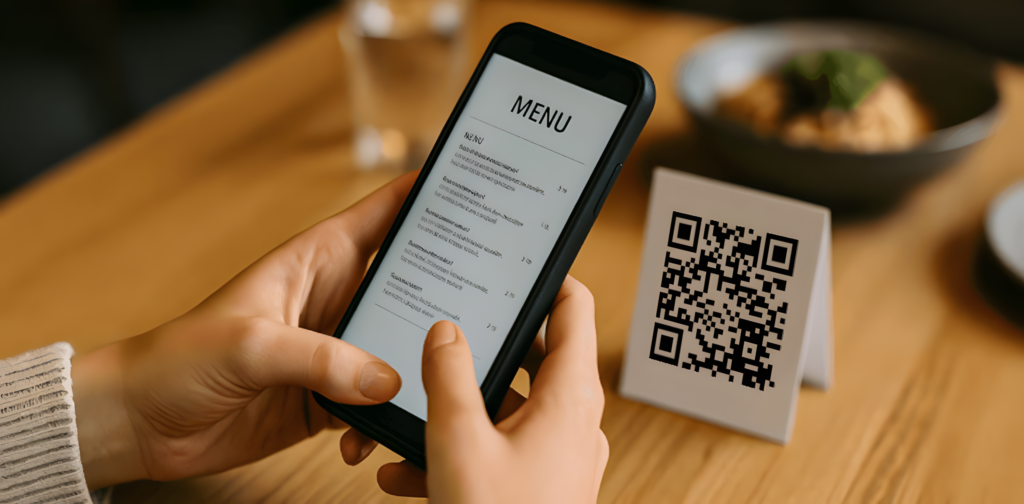
A QR (Quick Response) code is a two-dimensional barcode that stores information such as a URL. When customers scan the QR code using their smartphone camera, they are redirected to a digital interface, usually a web-based menu.
Restaurants typically connect QR codes to:
- A mobile-optimized website page
- A cloud-based digital menu system
- A POS-integrated ordering platform
- A full contactless ordering environment
Once scanned, customers can:
- Browse food and beverage items
- View images and descriptions
- Check prices
- Read allergen and nutritional information
- Place orders (in advanced systems)
Instead of handing out physical menus, restaurants place QR codes on tables, walls, receipts, counters, or signage. This is the fundamental operational structure behind How Restaurants Use QR Codes for Digital Menus.
Why It Matters: Operational and Strategic Benefits
1. Cost Reduction
Traditional menus require:
- Frequent reprinting
- Seasonal updates
- Replacements due to wear and tear
- Design adjustments
Digital menus eliminate recurring printing costs. Updates are made instantly online, reducing material and labor expenses.
2. Real-Time Flexibility
One of the strongest advantages in How Restaurants Use QR Codes for Digital Menus is the ability to update instantly.
Restaurants can:
- Remove sold-out items immediately
- Adjust pricing
- Add daily specials
- Launch promotional offers
There is no need to wait for new print runs.
3. Enhanced Hygiene
Contactless interaction reduces shared physical surfaces. While health concerns triggered early adoption, hygiene remains a long-term consumer preference.
4. Improved Customer Experience
Digital menus offer richer features than printed versions, including:
- High-resolution images
- Detailed ingredient lists
- Language switching
- Dietary filters
This improves clarity and reduces ordering mistakes.
5. Data Insights and Analytics
Advanced systems track:
- Scan frequency
- Most viewed dishes
- Conversion rates
- Peak ordering times
These insights help restaurants refine pricing, inventory planning, and marketing strategies.
Technical Framework: Static vs Dynamic QR Codes
A critical aspect of How Restaurants Use QR Codes for Digital Menus involves selecting the correct type of QR code.
Static QR Codes
- Fixed URL
- Cannot be edited after printing
- No tracking analytics
- Suitable for permanent links
Dynamic QR Codes
- Editable destination link
- Scan analytics available
- Greater flexibility
- Ideal for evolving menus
Dynamic QR codes are generally preferred for restaurants because they allow backend updates without reprinting materials.
Step-by-Step Guide to Implementation
Restaurants exploring How Restaurants Use QR Codes for Digital Menus typically follow these structured steps.
Step 1: Choose a Platform
Options include:
- Custom-built website pages
- Digital menu SaaS platforms
- POS-integrated systems
Ensure full mobile optimization.
Step 2: Build the Digital Menu
The menu must include:
- Clear category structure
- Readable typography
- Optimized images
- Transparent pricing
- Allergen information
Avoid cluttered layouts.
Step 3: Generate QR Codes
Use reliable QR generation tools. Consider dynamic codes for flexibility and analytics.
Step 4: Strategic Placement
Common placement areas:
- Table stands
- Window decals
- Counter cards
- Takeaway packaging
Ensure high contrast for easy scanning.
Step 5: Test Across Devices
Test on:
- Multiple smartphone models
- Different lighting conditions
- Various browsers
Step 6: Train Staff
Staff should:
- Explain how to scan
- Assist customers unfamiliar with QR
- Provide backup printed menus when necessary
Proper implementation ensures smooth adoption.
Comparison: Printed Menus vs QR Digital Menus
| Feature | Printed Menu | QR Digital Menu |
|---|---|---|
| Update Speed | Slow | Instant |
| Printing Cost | Recurring | Minimal |
| Hygiene | Shared contact | Contactless |
| Analytics | None | Available |
| Sustainability | Paper waste | Reduced waste |
| Scalability | Limited | Highly scalable |
| Multimedia Content | No | Yes |
This comparison highlights why How Restaurants Use QR Codes for Digital Menus is increasingly becoming industry standard.
Industry Trends and Data
Research from the National Restaurant Association shows that digital transformation remains a major investment focus in the restaurant sector.
According to data from Statista, smartphone usage continues to rise globally, supporting QR adoption across demographics.
Technology insights published by Deloitte emphasize that contactless solutions are transitioning from temporary measures to permanent operational strategies.
These trends confirm that How Restaurants Use QR Codes for Digital Menus reflects long-term digital evolution rather than short-term adaptation.
Legal and Regulatory Considerations for QR-Based Menus
As QR-driven systems become integrated into daily restaurant operations, compliance is no longer optional. While digital menus may seem like a simple technological upgrade, they often intersect with broader legal, consumer protection, and accessibility frameworks. Restaurants implementing QR-based solutions must ensure their digital systems align with regulatory standards in their region to avoid operational and reputational risks.
Data Protection and Privacy
If a QR-linked digital menu collects customer information—such as email addresses for marketing, phone numbers for reservations, or payment details for online ordering—the restaurant becomes responsible for safeguarding that data. Depending on the country or region, businesses may be required to comply with specific data protection laws.
Key responsibilities often include:
- Publishing a clear and accessible privacy policy
- Obtaining explicit consent before collecting personal information
- Implementing secure data storage and encryption practices
- Allowing customers to access, update, or request deletion of their data
Failure to maintain proper data security can lead to legal penalties, loss of consumer trust, and long-term brand damage. Even small restaurants should treat digital data management with the same seriousness as larger enterprises.
Accessibility Regulations
Digital transformation must remain inclusive. In some jurisdictions, businesses are required to ensure that digital interfaces meet accessibility standards. A QR-based menu is considered a public-facing digital service and may need to accommodate users with disabilities.
Accessibility considerations may include:
- Legible font sizes and scalable text
- Strong color contrast for readability
- Compatibility with screen readers
- Logical navigation structure
Ignoring accessibility does not just limit customer experience—it can also create legal exposure in regions with strict compliance requirements. Inclusive design benefits both users and businesses.
Licensing, Pricing Accuracy, and Transparency
Digital flexibility does not remove the obligation to provide accurate and transparent information. Restaurants must ensure that:
- Menu prices are current and consistent
- Taxes and service charges are clearly disclosed
- Ingredient and allergen information is accurate
- Promotional terms are transparent
Any misleading pricing or incomplete disclosure—especially regarding allergens—can create liability. Regulatory authorities in many regions treat digital menus with the same legal standards as printed materials.
Maintaining accuracy and transparency is not merely about compliance; it strengthens customer trust and reduces operational disputes.
Security Considerations
Restaurants implementing How Restaurants Use QR Codes for Digital Menus must prioritize security.
HTTPS Encryption
All digital menu pages must use secure HTTPS protocols to protect customer data.
QR Code Tampering Prevention
Physical QR codes can be replaced maliciously. Restaurants should:
- Inspect QR displays regularly
- Use branded designs
- Monitor traffic analytics
Data Privacy Compliance
If collecting customer data, restaurants must comply with relevant data protection regulations.
Infrastructure Requirements for Reliable QR Menu Performance
A QR-based digital menu is only as strong as the infrastructure supporting it.
Internet Connectivity
Reliable Wi-Fi or cellular data access is essential. Restaurants should:
- Test signal strength across all seating areas
- Consider guest Wi-Fi access
- Ensure sufficient bandwidth during peak hours
Without stable connectivity, customer frustration increases.
Hosting and Server Stability
Digital menus hosted on unstable servers may crash during high traffic periods. Restaurants should:
- Use reliable hosting providers
- Monitor uptime
- Optimize for mobile speed
A slow or unavailable menu directly affects customer satisfaction.
Device Compatibility
The digital interface must function across:
- iOS devices
- Android devices
- Multiple browser types
Consistent cross-device testing prevents technical barriers.
Accessibility and Inclusivity
Not all customers are comfortable with digital scanning.
Best practices include:
- Providing limited printed menus
- Offering staff assistance
- Using large, readable fonts
- Ensuring screen reader compatibility
Accessibility strengthens brand inclusivity.
Performance Metrics to Monitor
Restaurants using QR systems should track:
- Scan-to-order conversion rate
- Average order value
- Time to order
- Most viewed items
Data analysis improves menu engineering and profitability.
Upselling and Revenue Optimization
Digital menus allow:
- Automated add-on suggestions
- Combo recommendations
- Limited-time promotions
Printed menus cannot adapt dynamically. Digital systems support revenue growth without additional staff effort.
Sustainability Impact
Digital menus reduce:
- Paper waste
- Ink consumption
- Plastic lamination disposal
Environmentally conscious restaurants can integrate QR adoption into sustainability messaging.
Common Mistakes to Avoid
When exploring How Restaurants Use QR Codes for Digital Menus, avoid these mistakes:
- Poor Wi-Fi infrastructure
- Slow-loading pages
- Overcomplicated navigation
- Low-quality QR printing
- Lack of staff training
Avoiding these errors ensures higher customer satisfaction.
Financial Impact Analysis: Short-Term Cost vs Long-Term Value
When evaluating digital menu adoption, restaurants must analyze both initial investment and long-term savings.
Initial Costs May Include:
- Website or software development
- QR code design and printing
- POS integration setup
- Staff training
Long-Term Savings Often Include:
- Elimination of recurring printing expenses
- Reduced design revision costs
- Lower menu replacement frequency
- Decreased manual labor in order taking
Beyond direct savings, digital menus can increase revenue through:
- Upselling automation
- Dynamic promotions
- Improved order accuracy
When assessed over multiple years, many restaurants find the long-term value outweighs the initial setup investment.
Practical Example: Mid-Sized Casual Dining Restaurant
Consider a 40-seat casual dining restaurant that updates its menu three times per year due to seasonal ingredients and pricing adjustments.
If each print cycle involves design changes, proofing, and physical production, costs accumulate across the year. Even modest printing expenses multiply over time, especially when menus require lamination or premium paper quality.
By transitioning to a QR-based digital menu, the restaurant eliminates recurring print cycles. Menu updates can be completed in minutes rather than days. Price adjustments, out-of-stock items, and daily specials can be modified instantly without additional production cost.
In addition, the restaurant integrates automated add-on suggestions within its digital menu. If even a small percentage of customers select an additional side dish or beverage prompted by the system, the increase in average order value compounds over months of service.
Over a multi-year period, the combination of reduced operating costs and incremental revenue improvements shifts the digital menu from being a convenience tool to a measurable financial asset.
Future Outlook
The evolution of How Restaurants Use QR Codes for Digital Menus continues.
Future developments may include:
- AI-based menu personalization
- Voice-enabled ordering
- Loyalty integration
- Augmented reality dish previews
- Automated feedback collection
QR menus are becoming entry points into broader digital restaurant ecosystems.
Customer Behavior Insights and Adoption Challenges
While QR adoption has grown rapidly, customer behavior varies across demographics.
Generational Differences
Younger customers often adapt quickly to QR scanning, while older customers may prefer traditional menus. Restaurants should balance innovation with inclusivity.
Technology Comfort Levels
Adoption success depends on:
- Clear instructions
- Visible QR placement
- Simple navigation
Complex digital interfaces reduce engagement.
Perception of Value
If a QR menu feels slow or incomplete, customers may perceive it as a downgrade rather than an upgrade. Execution quality directly influences perception.
Understanding customer psychology ensures smoother digital transitions.
Frequently Asked Questions About QR Code Digital Menus
1. Are QR code menus still relevant after the pandemic?
Yes. While QR adoption accelerated during health-related restrictions, restaurants continue using QR-based digital menus because of operational efficiency, real-time updates, and cost savings. The technology has transitioned from emergency response to long-term digital infrastructure.
2. Do customers prefer QR menus over printed menus?
Preferences vary by demographic. Younger customers often prefer digital access, while older diners may still prefer printed menus. Successful restaurants provide both options to maximize inclusivity and customer satisfaction.
3. Are QR menus expensive to implement?
Initial setup costs may include website updates, QR printing, and possible POS integration. However, long-term savings from eliminating recurring printing and menu redesign often offset the initial investment.
4. Can QR menus increase restaurant revenue?
Yes. Digital menus can incorporate automated upselling, featured promotions, and dynamic item placement. These features can increase average order value without additional staffing costs.
5. What are the risks of using QR code menus?
Risks include poor internet connectivity, security vulnerabilities, and customer resistance if the system is poorly implemented. Proper infrastructure, encryption, and user-friendly design minimize these risks.
Conclusion
A comprehensive understanding of How Restaurants Use QR Codes for Digital Menus reveals a significant transformation in restaurant operations. QR-driven digital menus reduce cost, increase flexibility, improve hygiene standards, provide actionable data insights, and enhance customer experience.
When implemented strategically—with proper security, accessibility considerations, staff training, and analytics tracking—QR digital menus offer sustainable long-term benefits.
As digital adoption continues to expand globally, QR-enabled menu systems are positioned to remain a foundational component of modern restaurant operations.